Where Charm Meets Brilliance
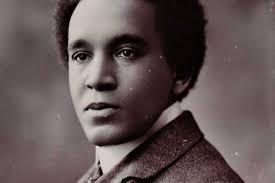
Born in 1875 to a white English mother, Alice Hare Martin, and a Sierra Leonean father, Samuel Coleridge-Taylor was raised by his mother and never knew his father, who had moved back to Sierra Leone before Samuel was born. Alice named Samuel after poet Samuel Taylor Coleridge, and, being from a family with many talented musicians, her father began teaching Samuel violin at a young age. It did not take very long for Samuel to surpass his grandfather’s abilities, at which point he enrolled in the new Royal College of Music.
Samuel Coleridge-Taylor wrote his first composition in his first year, and within a couple of years under the tutelage of Charles Villiers Stanford (with notable fellow students, Gustav Holst and Ralph Vaughn Williams), he changed his major from performance to composition. While Samuel would periodically become the subject of racial abuse, Stanford had always thought of him as one of his best pupils. After a particularly racist incident was directed toward Coleridge-Taylor, Stanford told the young composer he “had more music in his little finger than [the abuser] did in the whole of his body.”
After his success from his Dvorak-influenced piece, Hiawatha’s Wedding Feast, Coleridge-Taylor was able to travel to America, where he was celebrated among intellectuals of the African-American community, including Booker T. Washington and W.E.B Du Bois, who thought of him as a pioneer of black influence in the arts.
Petite Suite de Concert is a short four-movement piece completed in 1911. Although the exact circumstances of its composition are unclear, Coleridge-Taylor drew on themes from an earlier unfinished work, The Clown and Columbine, which was based on a poem by Hans Christian Andersen, and the suite reflects a strong French influence in its light textures and elegant orchestration. Petit Suite de Concert gained wider popularity only after the composer’s untimely death from pneumonia in 1912 at the age of 37. W.E.B Du Bois would eulogize Coleridge-Taylor, “In the annals of the future his name must always stand high, but with the priceless gift of years, who can say where it might not have stood.”